Broadway Junior School, Sunderland
- Date July 9, 2026
Before OPAL, playtimes were more limited in terms of choice and creativity. Many children relied on football, and some found it difficult to engage positively during breaks. Our outside area was a sea of grey yard, dominated by a couple of ball games.
There were fewer opportunities for imaginative, collaborative and active play, and some children struggled to find activities that suited their interests or needs. This could sometimes lead to boredom, disagreements, and lower levels of physical activity.
Our OPAL journey
We began our OPAL journey because we wanted to improve the quality of play and lunchtimes for all children at Broadway Junior School. We recognised that play is essential for children’s wellbeing, development and happiness in school.
Children needed more opportunities for creativity, physical activity, independence, and social interaction during breaks. Our aim was to create more inclusive, active and meaningful play opportunities so that every child could enjoy their break times and return to class ready to learn.
The impact of improving playtimes
The impact has been overwhelmingly positive. Playtimes are calmer, more purposeful and more enjoyable for everyone. Children return to lessons more engaged and ready to learn, staff relationships with pupils have strengthened, and there is a much stronger sense of community across the school. OPAL has become an important part of our school culture.
Children are noticeably happier and more settled. Playtimes now provide a genuine opportunity to relax, connect with friends and enjoy being outdoors, which has had a positive impact on wellbeing and emotional regulation.
OPAL has significantly increased children’s physical activity. They are climbing, building, running and exploring in ways that develop coordination, strength and confidence.
Children are developing stronger friendships, teamwork and communication skills. Mixed-age and collaborative play has helped pupils become more empathetic, inclusive and supportive of one another.
Playtimes now help children develop creativity, problem-solving, leadership, negotiation and risk-management skills. Many children take pride in organising games and leading activities independently.
OPAL encourages children to take manageable risks, solve problems and persevere when things do not go to plan. We have seen children become more confident, adaptable and independent as a result.
Investing in playtimes has increased attendance
We have seen encouraging improvements in attendance and punctuality since developing our OPAL provision. Children are excited to come to school and many talk positively about playtimes as one of the highlights of their day. Families often comment that children look forward to school because of the play opportunities available during OPAL lessons. Our persistent absence rate has reduced from 18.30% to 12.03%
Better play has led to better behaviour
We have seen improvements in behaviour both at playtime and in class. Children are more engaged, have more positive outlets for their energy and are developing better social skills through play. This has led to fewer behaviour incidents and a more positive atmosphere across the school.
Pupils are more cooperative and better able to regulate their behaviour independently. There are noticeably fewer incidents at break times, meaning children return to lessons calmer, happier and more ready to learn. Suspensions, which were often during or just after break have also significantly reduced.
A marked reduction in playtime accidents
Although children are more active, purposeful play and clearer zones for activities have helped reduce conflict and unnecessary incidents. They also learn how to assess risk safely and support one another during play, which has helped reduce avoidable accidents and conflicts.
Staff have positively engaged with play
Staff feel much more positive about playtimes. They report that lunchtimes are more enjoyable and less stressful, and they value seeing children engaged in meaningful play. Staff also appreciate the positive impact OPAL has had on children’s behaviour, wellbeing and readiness for learning. Instead of primarily managing behaviour, they are able to support and observe rich play experiences. Staff report that playtimes are calmer, more enjoyable, and more rewarding.
Providing an inclusive play offer
Our OPAL provision offers a wide range of activities to suit different interests, abilities and personalities. Children can choose active play, imaginative play, creative play, quiet spaces or collaborative projects. The flexibility of OPAL means that every child can find something that engages them and helps them feel included.
Improved parent engagement
Parent engagement has improved through donations of loose parts, support for outdoor play initiatives, and positive conversations about the impact of OPAL on their children. One parent volunteered to do a leaflet drop in the local area asking for donations to school.
We also run OPAL Play sessions for parents to come to school and play alongside their children. Feedback is overwhelmingly positive, one parent shared, “There are lots of activities to choose from, compared to when I was at school! The children played excellently with no quibbling. It is great for mental health, wellbeing and interacting with others.” Parents regularly share how much their children enjoy playtimes and talk about their experiences at home.
Our favourite way to play
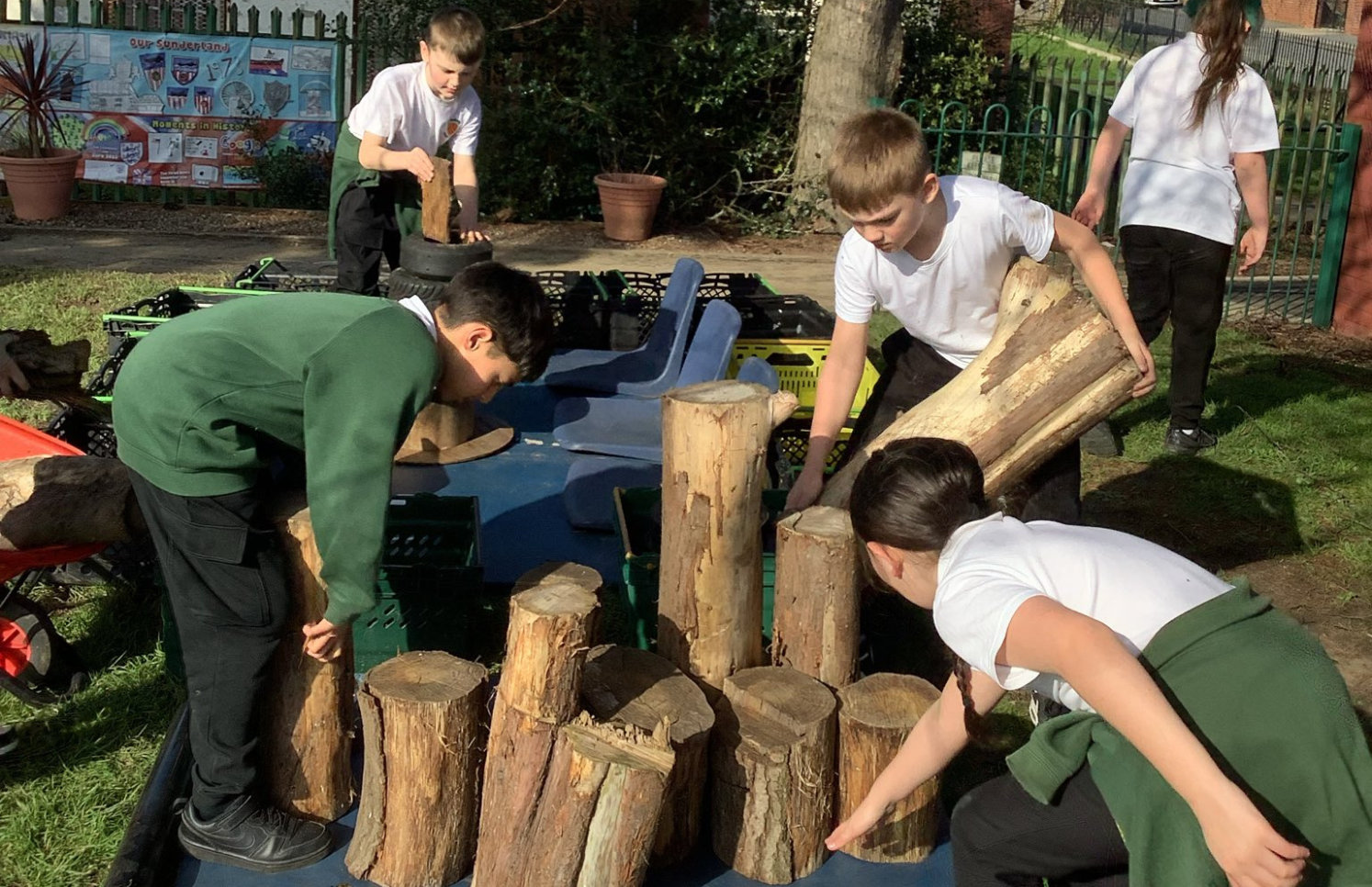
One of the firm favourites has been our loose parts area, where children can build, create and work together imaginatively. Children love using crates, tyres, fabrics, and other materials to create imaginative spaces together. This space encourages creativity, teamwork and problem-solving, and is consistently among the most popular areas at playtime.
One of the most unique play spaces at Broadway Junior School has been our play bus. It has captured the children’s imagination and provides endless opportunities for role play, social interaction and creative storytelling. Whether children are pretending to travel, creating their own adventures or simply enjoying time with friends, the reading/play bus has become a real asset of our OPAL provision.
David Walton-Jonas, Headteacher, Broadway Junior School, Sunderland
Tag:Case study

You may also like
Hebburn Lakes Primary School, South Tyneside

Thomlinson Junior School, West Cumbria